

Write Every Day
Or don't, that's okay too.
IN BRIEF:
Looks like I’m locked-in for a panel at Eastercon. Probably ought to wait until the programme is finalised before putting any details out there, but this is good news.
For the first time, I’d wager, in my life, I’ve written something for nineteen straight days. More below.
Shout out to Angel Belsey, whose Six Mile Store is out this week from Deixis Press. Recommended.
ON WRITING:
If there’s one piece of writing advice I abhor, and yes I’ve written about this previously, it’s Write Every Day.
Not because it’s bad advice; it’s not. My well-documented issue with it is the manner in which it’s presented as Gospel by a lot of writers. Millionaire professional writer Neil Gaiman once said that writers wrote every day because they had to, which seems to pretty much classify anyone who doesn’t write every day as ‘not a writer’.
Now, on the one hand, that doesn’t account for the fact that most of us, unlike the millionaire professional writer Neil Gaiman, have day jobs and lives that don’t always allow for that ‘get up at six, spend five hours at the keyboard, meet our agent for lunch, then walk the dog in the afternoon’ lifestyle that apparently defines the true writer. On the other hand, we now all know that Neil Gaiman is an objectively terrible and abusive person, so who cares what he thinks.

No, for the everyday Joes and Jos like you and me, Write Every Day is a luxury that sometimes just has to come second to our day jobs, our health, our families and other commitments. So if we let W/E/D define ‘being a writer’ for us, we set ourselves up to fail.
Which begs the question, why in the heck did I just commit to writing two hundred words every day for a year? Well, if there’s one thing I’ve lacked my entire life, it’s discipline. I’m just not, in most areas of my life, a driven guy. And that’s okay, I can live with that. Yet it’s true to say that this lack of discipline has come to define my writing (ha) career.
Therefore, inspired in no small part by the great Mario Levrero, and my own experience writing The Forcek Assignment, I’ve decided to embark on this writing experiment. Writing two hundred words a day should be doable; it’s a lovely small number. It takes no more than 10-15 minutes, but it creates habit. And the key, for me, at least is that these two hundred words are about nothing. It’s not two hundred words on my latest novel. It’s not even two hundred words as a journal or diary entry, although I dare say a lot of them will turn out to be that. It’s just two hundred words. On anything. My day. My cats. Trump. Iran. Snowboarding. LEGO. My emotional state. Philosophy. Art. Whatever strikes me as I sit down at my laptop. Crucially, they don’t have to be two hundred good words.
To what end? Well, for all the good reasons they usually quote when advising you to W/E/D. Creating habit, exercising the writing ‘muscle’, self-improvement. But I’m also curious to see if anything concrete begins to emerge from the mindsoup. Will patterns emerge? Can I trace a thought, an obsession, from inception to full development? How much of it will be about my cats? Can an exercise about nothing become something?
I’m only nineteen days in, which seems like a fate-temptingly short time to go public about doing it. On the other hand, as we all know, the more people we tell we’re doing a thing, the more we risk losing face by giving up. And, actually, nineteen days is both a short amount of time and an incredible achievement.

As I said up top, I don’t think I’ve written for two weeks straight in my life. And it’s not at the expense of actual projects - I’ve also written another 4k on the horror novel since starting this exercise. So it’s not getting in the way. It’s not the new shiny thing that I’m switching to; it’s a simple, short thing I can do every day that will hopefully still keep me focused on the current thing.
Just, um, if I don’t mention it again, let’s drop it, yeah?
I have enjoyed:
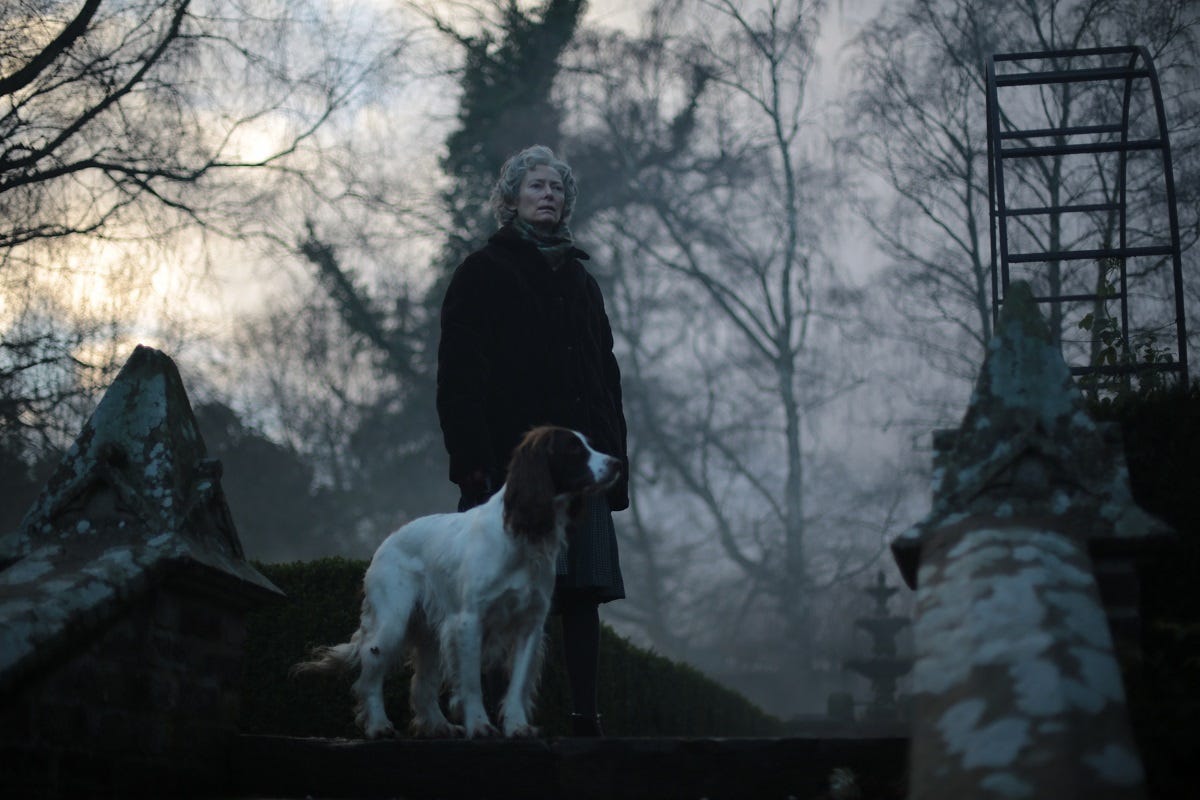
The Eternal Daughter - Tilda Swinton plays Julie, a woman taking her mother Rosalind (also Swinton) back to the house she was raised in, which is now a posh country hotel. Seemingly alone in the hotel but for a couple of employees, we begin to sense that things are not as they seem… Director Joanna Hogg makes some excellent choices; the score could have been lifted directly from a spooky 1970s TV play and there are very few attempts1 to put Julie and Rosalind in the same shot, either via clunky superimposition or back-of-someone-else’s-head-in-a-wig trickery. Simply and elegantly done, it feels like a relic from a different age. Bonus points, too, for Julie’s unerring politeness in the face of Carly-Sophia Davies’ hilariously unhelpful receptionist. It’s a slow burn, and there may be few surprises in the denouement, but it’s so well done.
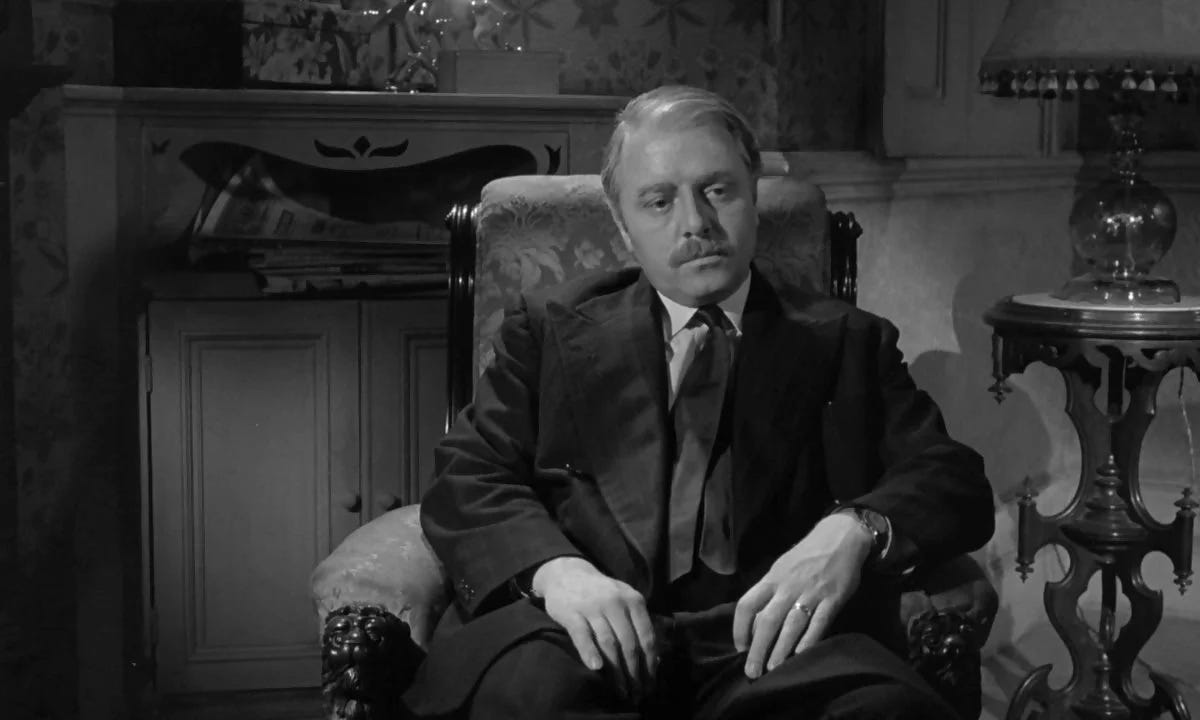
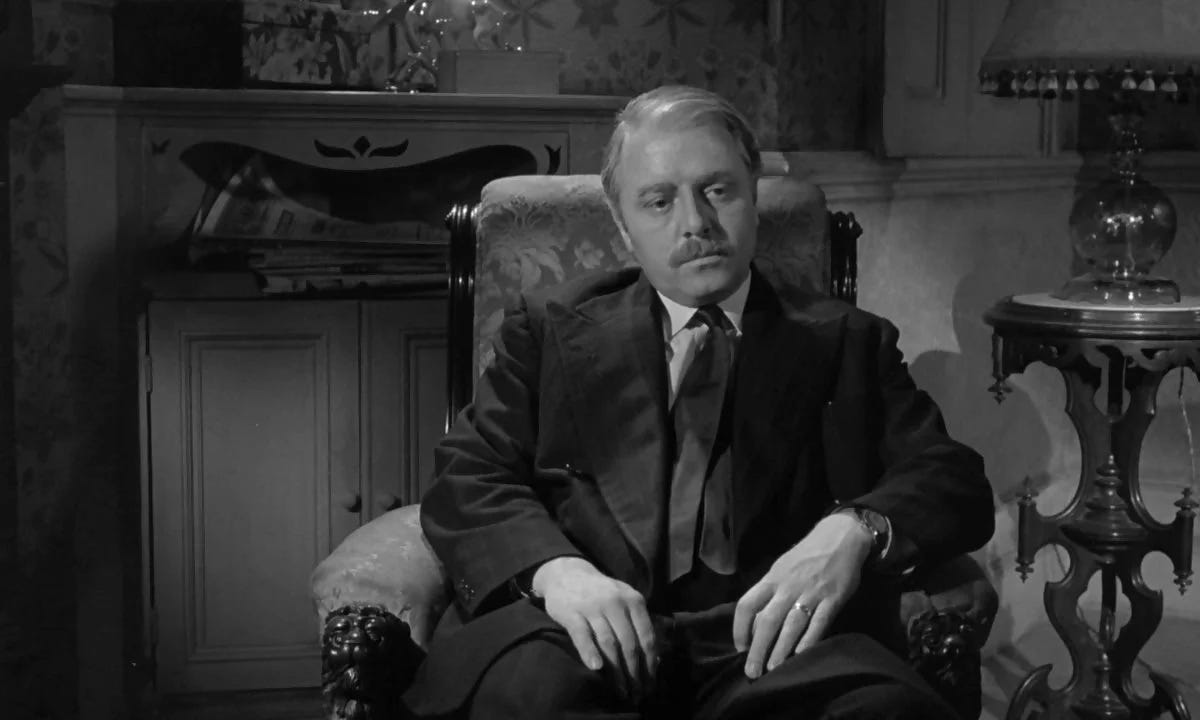
The latest live-action Scooby-Doo is really aiming for a darker vibe… Seance on a Wet Afternoon - Kim Stanley was Oscar-nominated2 for her role as a medium who dreams up a scheme to kidnap a rich family’s daughter, in order that she can reveal the child’s whereabouts and become famous for her psychic powers. Richard Attenborough, in a performance that must have been the inspiration for Clive Swift’s Richard in Keeping Up Appearances, is the hapless husband persuaded to go along with it. It feels long, longer than it needs to be, but Stanley and Attenborough are both superb and it’s a genuine nail-biter.
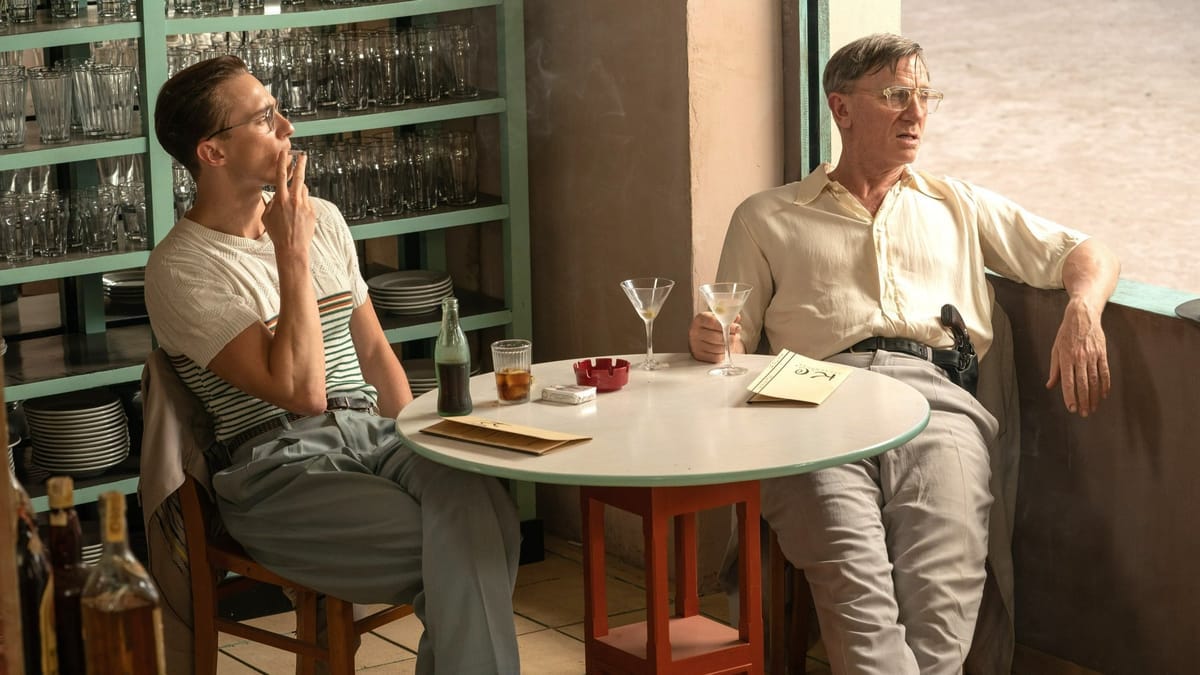
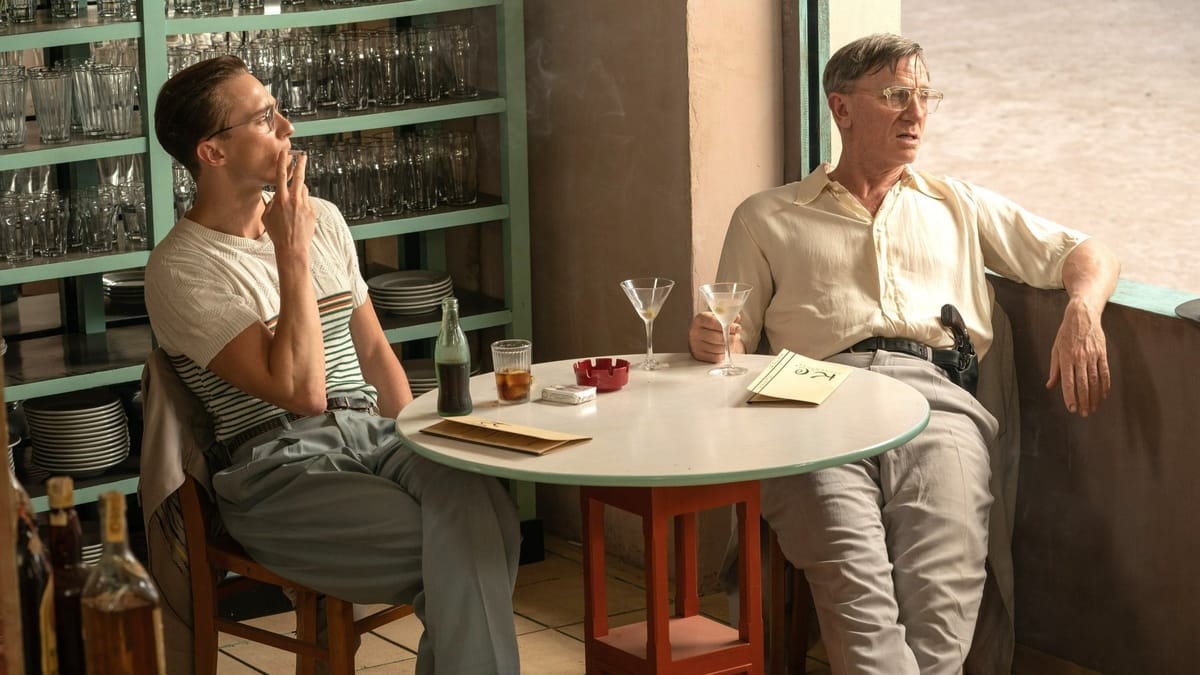
“When this is all over, I’m going to retire to a remote island and raise dinosaurs…” Queer - Based as it is on a William S. Burroughs short story, there’s no prizes for guessing that the plot of this 2024 movie mainly revolves around drugs, sodomy and being a writer. Daniel Craig plays Burroughs-by-proxy in a performance that will wipe every trace of his character-less Bond from your memory, and Luca Guadagnino’s direction creates a stunning visual feast for the eyes. You could argue that not a lot actually happens, or that putting Jason Schwartzman in a fat-suit isn’t the kind of thing we do any more, but really, this is the kind of beautiful movie that defies criticism.
I wonder how he likes his martini… Vegetables - This week’s been a chaotic blend of working late and feeling knackered (both of us) so we ended up consuming far too much take-out. The guy in the chip shop did a double-take when I went in Wednesday night; “But you were here last night..?” I’m not normally excited by vegetables but it was so good to have a proper home-cooked last night…
You can buy It’s Hard to Tell You This, Parallels, and Greyskin directly from Deixis Press. Playtime’s Over is published by Propolis. All should also be available from all the usual places, online and off.
Ray Adams’ self-published books are available from Amazon, until I get around to finding a more ethical alternative, or out of my garage.
I also review books on my website, most of which are available through my affiliate book shop on uk.bookshop.org - it’s a great alternative to certain online leviathans owned by Trump-supporting billionaires, and supports independent bookshops. Affiliates also get a % of books sold through them, so if you buy something from them, I gets paid...
So few, in fact, that until I went looking for screenshots for this newsletter, I’d imagined there were none.
Losing out to Julie Andrews for Mary Poppins, something I was totally unaware she’d won an Oscar for until looking it up for this.
I work on my book for at least two hours a day. That doesn't mean I write at least two hours a day. First of all, I usually do not work on weekends. Also, there is more to writing a book than writing sentences. I write historical crime fiction, and research is a huge part of creating a story, for instance. There are also things like checking a timeline, profiling a character, and making sure that the world you are creating is consistent. All those tasks are intrinsic to writing a book, but none of them implies writing a sentence.